

Last updated on June 22, 2025
Do you want to improve your search engine rankings and attract your target audience? Whether you call them "target query," "keyword," or "key phrase," these terms are key to increasing your online visibility. Simply put, they are the words or phrases your potential audience types into search engines to find information, services, or products. Don't let your website get lost in the depths of Google! In this article, I'll reveal everything you need to know and guide you in choosing your keywords.

What is a target query?
Defining a target query
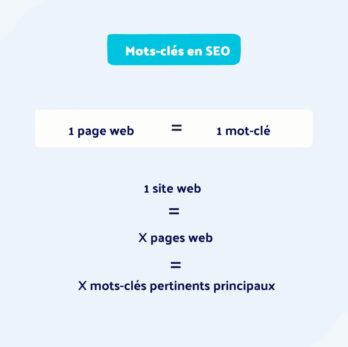
For the owner of a website, the SEO target keyword corresponds to the main keyword around which a web page is optimized.
These are the terms that internet users type into search engines (Google, Bing, etc.) to find precise answers to their needs. They are often related to a specific research intent.
➡️ Example: comfortable and elegant women's shoes
Key points to remember : one web page = one specific keyword
What is the purpose of keywords in SEO?
Choosing the right keywords attracts the attention of internet users and search engine crawlers. These crawlers scan, index, and rank pages based on several criteria, including target queries. Why does this matter so much? Reaching the top of organic search results offers a significant advantage, especially considering that the first three results on Google capture approximately 60 % clicks (Source: Moz). Carefully optimized content around a relevant keyword not only increases your chances of appearing in first page ; It also targets the right people and boosts your conversion rate.
Choosing the right target query to optimize your online visibility
Each target query must be carefully chosen in order to attract qualified traffic to your site, but also to convert your audience.
Define your marketing persona
Who is your target audience on the web? By creating and understanding your persona, You will refine your messages for tailor-made communication. This will help you choose targeted keywords and to create content that resonates deeply with your audience.
➡️ What will she type into Google to find you online? Understanding her vocabulary is key to capturing her attention and engaging effectively. The more you master her language, the better you'll connect with your audience.
Consider search intent
Search intent is the secret to reaching your target audience: it reveals exactly what your users want to find. Each category of intentional keywords guides users at different stages of their purchasing journey.
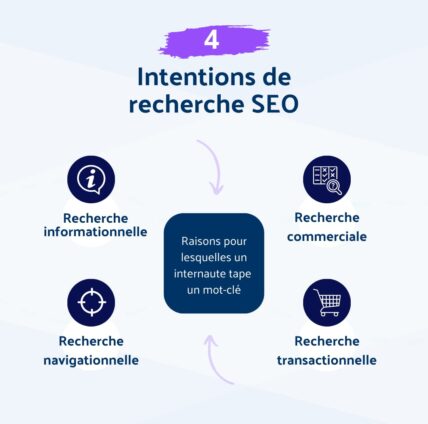
Informational keywords
Internet users want to get a precise answer to a question or access general information.
➡️ Visit Paris
Commercial keywords
The internet user demonstrates a keen interest in a product or service.
➡️ Car insurance comparison
Transactional keywords
The internet user wants to take action or buy something.
➡️ Buy SNCF ticket
Navigational keywords
The internet user is trying to access a website they already know or a specific web page.
➡️ Facebook.com
Prioritize long tail keywords
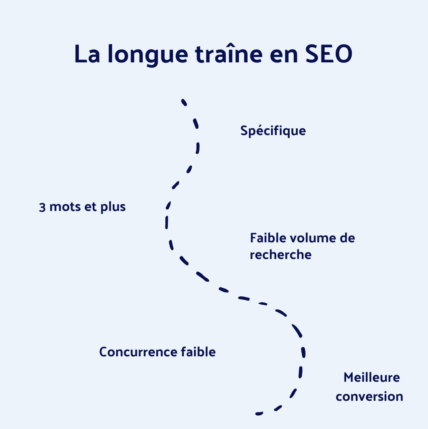
Until 80% traffic A website's keywords originate from long-tail keywords. These phrases... three words or more attract qualified traffic and offer a better conversion rate, despite a lower search volume.
Example of a generic keyword: "family vacation".
Example of a long-tail keyword: "best family holidays in France".
Conduct a competitive SEO analysis
Wondering how to stand out among competitors targeting the same audience? Opt for a thorough competitive analysis. Don't be intimidated by fierce keyword competition; there's always a niche for you with the right strategy. Use tools like SEMrush to assess the SEO difficulty target queries and inspect the leaders of the search results (SERP).
➡️ Which sites dominate the first page of results? Rate them editorial content, the quality of their backlinks, and their authority domain (DA). How can you do better to stand out?
Balancing competition and volume in keyword selection
But then why worry about the search volume for a keyword Without search, there is no traffic. Without traffic, there are no conversions. And without conversions, sales become a challenge.
For example, rather than aiming broadly "« Photographer »With its 110,000 monthly searches, you could choose:
➡️ Wedding photographer: 1600 monthly searches
➡️ Photography studio: 800 monthly searches
➡️ Photographer near me: 1000 monthly searches
➡️ Photographer in Saumur: 390 monthly searches
➡️ Photographer 49: 210 monthly searches
Think targeted, think local! These terms, while less frequently searched, attract a specific audience, ready to engage. Factor in seasonal variations and prioritize targeted queries directly related to your services. Even the zero-volume keywords These deserve attention: internet users' searches are getting longer (the famous long tail). We're also seeing new terms, previously unknown, flourishing online, as well as the emergence of very specific niches, etc. These emerging terms can quickly gain popularity.
As you will have understood, I advise you to choose the winning strategy : keywords that offer qualified traffic (and conversions) without engaging in a fierce battle for visibility.
Ensure the relevance of the query
Users are looking for specific answers—whether for information, products, or solutions to their problems. The key is to choose keywords that directly reflect the content of your page or site.
➡️ Example of an irrelevant query:
«"Tips for saving on energy bills" on a website that sells energy-efficient household appliances.
Why? Although it's about saving energy, visitors are looking for tips to reduce their bills. They're probably not interested in buying new appliances, but rather in tailored advice for changing their consumption habits. Aim for relevant keywords and aligned with the interests of your target audience.
How to find the right keywords?
➡️ Trust your own judgment first intuition, often underestimated!
Then, equip yourself with SEO tools such as SEMrush or Ubersuggest to decipher your audience's searches and your competitors' keyword strategies.
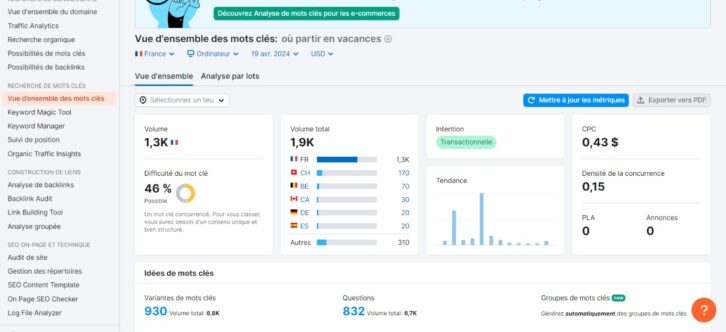
Browse the forums and user-generated content (UGC) to understand your target audience's real concerns. Let yourself be guided by the Google suggestions instantaneous and the related searches to track your audience's digital journey. Still within the Google family, don't miss out on Google Trends to capture current trends. online reviews They are a goldmine for discovering authentic keywords. Complete your toolbox with Answer the Public to directly view your audience's questions. Finally, take advantage of the social networks and make every interaction in your daily life enriching (active listening).
Where should the target query be placed in the text of a web page?
Congratulations, you've chosen your target keyword! Now it's time to start writing. Your mission, should you choose to accept it, is to create content that resonates with both Google and your readers. Enrich your articles with secondary keywords and expand the lexical field. But above all, integrate your keywords into the hot spots on the page in a natural way:
- The title.
- The H1.
- At the beginning of the introduction.
- At least one H2.
- The body of the text.
- The conclusion.
- The URL of your page.
- Alternative text for images (ALT).
- Link anchors.
How do I know if my SEO query is effective?
To determine the effectiveness of your SEO query, Focus on these key points:
- SERP ranking: check your position in search results using tools like SEO Hero Ninja or Google Search Console.
- Click-through rate (CTR): Check the CTR in Google Search Console and evaluate the power of your titles and meta descriptions.
- Organic traffic: Use Google Analytics to see if the traffic generated by your keyword is increasing.
- Visitor engagement: analyze time spent on page and bounce rate to measure the interest and relevance of your content.
- Conversions: Track key actions such as purchases or sign-ups (newsletter, webinars, etc.) to see if the query is attracting the right type of visitors.
With these key indicators, you'll see exactly how your keywords are performing. You can then fine-tune your SEO strategy and boost your results.
What is Yoast SEO target query?
Yoast SEO is a very popular WordPress plugin designed to help optimize your content for search engines. It allows you to choose a primary keyword, called target query, that you want to optimize to improve your page's ranking.
By entering this keyword into Yoast, the tool automatically analyzes your content and gives you concrete advice to adjust your titles, texts, and metadata to better match this target query.
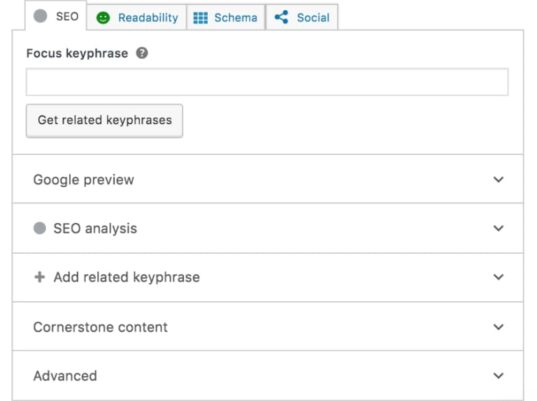
But be careful, Yoast doesn't do everything! Getting green lights is good, but it doesn't replace a SEO strategy well thought out. Reaching the first page also depends on keyword competitiveness, the quality of your content, and your link building strategy.
What to remember
In conclusion, choosing your target keyword is a crucial step in any SEO strategy. However, it's easy to make mistakes. Therefore, it's essential to understand your target audience, conduct thorough analysis of relevant terms, and consider search volume, competition, and authority. Don't limit yourself to popular keywords; also select niche phrases (long-tail keywords are highly recommended). Finally, remember that keyword optimization shouldn't compromise the quality of your content! Write for your core audience first and foremost, offering relevant and engaging content. Now you're ready to improve your online visibility, attract qualified leads, and achieve your SEO goals, all while avoiding common pitfalls.

I help B2B companies generate qualified leads through a data-driven, multi-channel SEO strategy, optimized for search engines and generative AI.
- How to do Pinterest keyword research? - October 21, 2025
- Website indexing: how to check and optimize your visibility on Google? - June 10, 2025
- SEO Redirection Plan: Instructions and Tips - June 10, 2025


